How a Serial-Schemer Made the First Million-Dollar Movie
On Erich von Stroheim's devilish indulgence Foolish Wives—Slant Top 100 Films #3

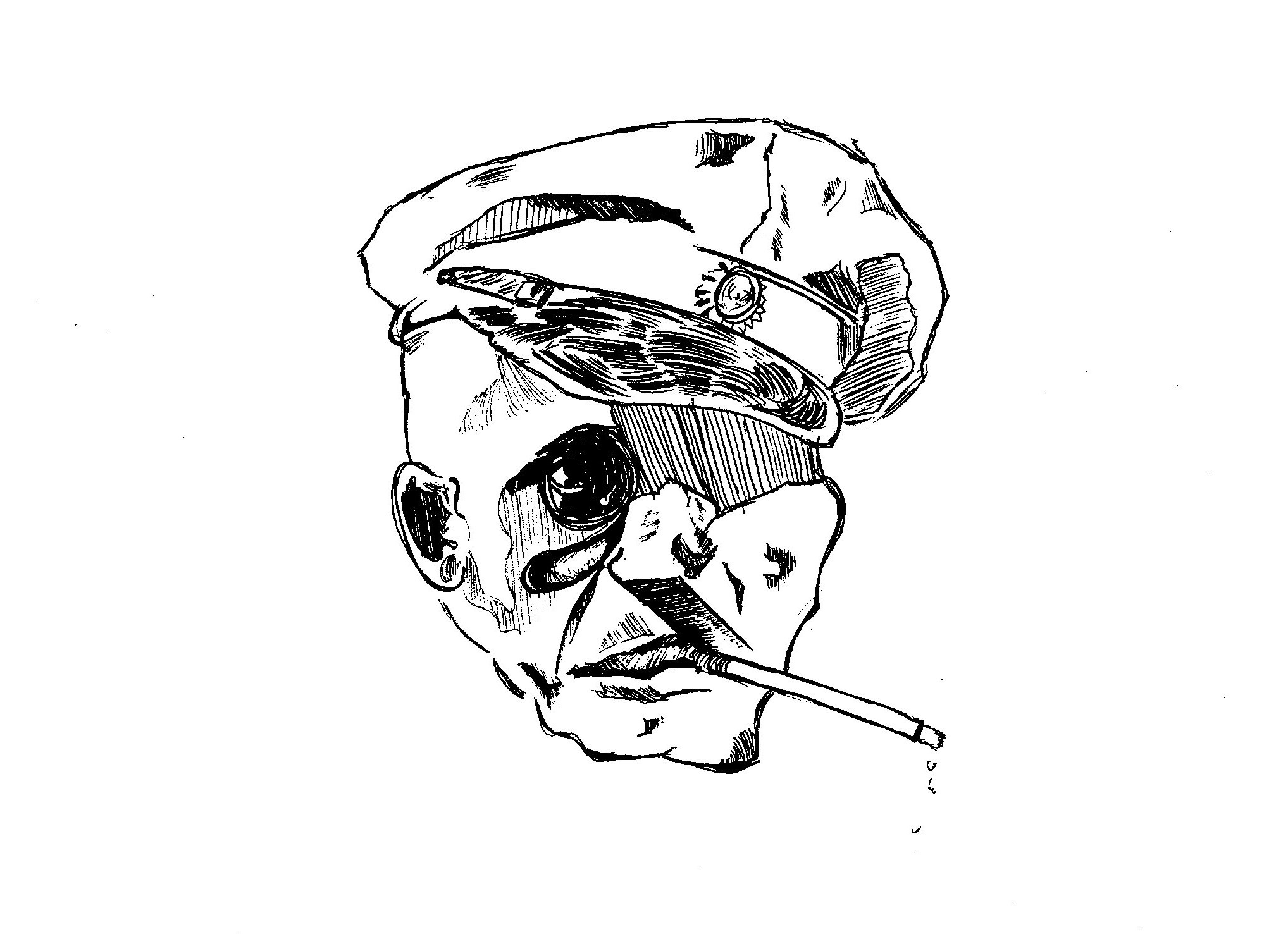
Dipped in acetic acid and imbued with fine-grade cynicism, Erich von Stroheim’s Foolish Wives is a ragged reel—a silent cinema ego-trip which rolls its eyes at the fairground thrills popularised by the Lumiere Brothers, those which came to define the origin of the medium. No more locomotives pulling into stations, Stroheim set a greedy, debased precedent for cinema interested in corruption and scheming. In entry three of Slant Magazine’s Top 100 Essential Films, silent cinema turns its back on folly and begins to interrogate something darker.
Set in a lavish reimagining of Monte Carlo (Stroheim’s simulacra of the cosmopolitan speedway), this pseudo-biographical dark comedy follows Stroheim as the dastardly Count Karamzin. Bedecked by two gorgeous princesses disguising themselves as the Count’s cousins (Maude George and Mae Busch), Karamzin infiltrates the life of Miss DuPont (Helen Hughes, wife to the U.S. Special Envoy. With a gleam in his eye and his fingers firmly crossed, Karamzin slowly siphons trust from Miss DuPont in the hope of piling her fortunes atop his own.
David Thomson’s essay on Foolish Wives picks up on the film’s almost radical psychological potential, arguing for a reconsideration of the film away from its headline-grabbing production context. “The very expensive public buildings of Monte Carlo are conventionally impressive”, writes Thomson, “but Foolish Wives is most gripping in one-on-one confrontations, where Stroheim filmed watchful faces with an acuity that few matched in 1922.” Here, Thomson refers to the Kubrick-style sets Stroheim constructed for the film. Opulent mansions of cardboard, peppered with pharaoh-worthy palm leaves and perched parrots, comprised Stroheim’s fictional Monte Carlo. His extravagance was so extreme that the budget rocketed to a million dollars, making Foolish Wives the first ever million-dollar movie.
Financiers had their heads in their hands, yet they didn’t miss a beat in spinning Stroheim’s fiscal irresponsibility into a marketing ploy. Universal reportedly had an electric sign erected on Broadway, telegramming the production’s weekly costs live to passers by, with the director credited as “$troheim”, a dig with hints of anti-Semitism. Stroheim was of Jewish descent, yet this was something he chose to hide. Robert Byrne speaks to Stroheim’s secret lives in his discussion with the BFI, stating that the film was:
all about Erich von Stroheim, a larger-than-life actor/director whose entire Hollywood career and persona were based upon a character he invented for himself; a debonair cavalry officer from the upper echelons of society.
Being Jewish had no role to play in this part, and so Stroheim hid it, albeit not very well. For the most part, however, the part was well played. Many assumed Stroheim had a military background, to the point that he was asked to advise on military costuming in other productions. Watch Foolish Wives, and the peacock-chest of medals boasted by Karamzin is as good evidence of service as any scar. Yet, Stroheim never served. Like Karamzin (purposely aligned with Stroheim in a scene depicting him reading a book authored by Stroheim), Stroheim was a serial schemer who blagged his way into the director’s chair.
But Thomson is right to look past this colourful production context. Despite the glitz and glamour, Foolish Wives is at its best working in micro. A scene where Karamzin leans against a lamppost in the rain, disguising his tears behind his typically impenetrable monocle, re-contextualises all of Karamzin’s and Stroheim’s schemes. Although he’s grinning through most of his sin, that doesn’t mean he exhibits no sign of introspection, or at least complexity, a depth which few silent films had managed to capture at this stage.
Thank goodness Stroheim did scheme to the top, because he is a seminal talent. Whether seen through dense composition or his acute documentation of emotion, Stroheim directed with bravado. It is gutting that the studio confiscated the picture from him and cut it relentlessly down from its initial near-7-hour runtime (eat your heart out Les Vampires) to the two-hour release that survives today. For such an artiste-cum-swiz to be beaten doesn’t seem fair. But that Foolish Wives exists at all is victory enough; a black lamb amidst other fledgling works, one that dared to drag film into the dark with a smirk.
Wonderful writing